Why Every Event Needs a Professional Sound Tech
You can rent the best audio equipment in the world — and still have terrible sound if no one knows how to run it. A professional on-site sound technician is the person who transforms good gear into a great experience.
What a Sound Tech Actually Does
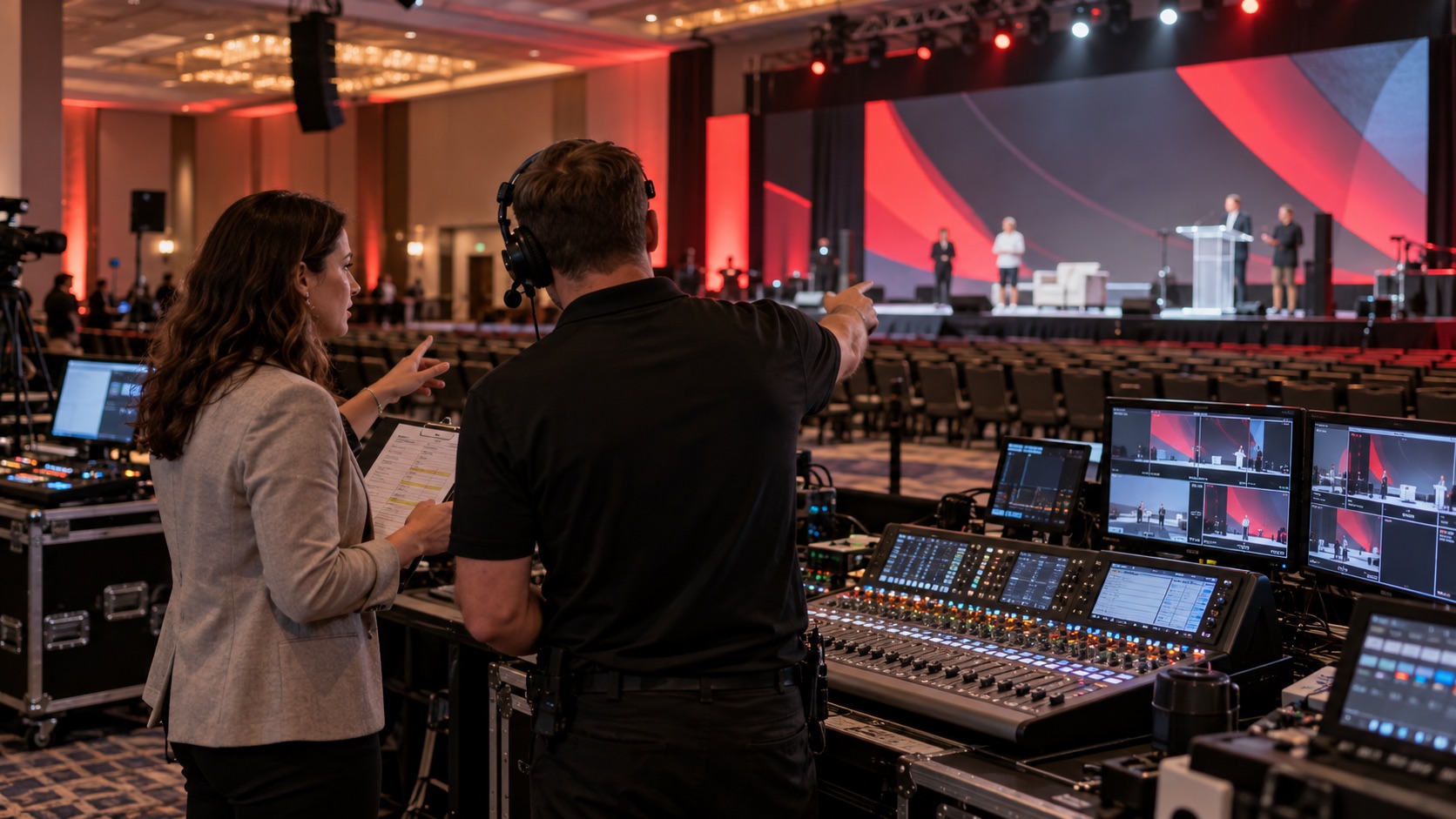
A professional FOH (front-of-house) engineer manages the audio mix that the audience hears. Their responsibilities at a live event include:
Soundcheck Before doors open, the sound tech works with each performer to build their mix. They set input gain levels, dial in EQ for each instrument and voice, program effects like reverb and delay, and calibrate the monitor mixes for performers on stage.
During the Show A skilled FOH engineer isn't just keeping levels in check — they're actively shaping the sound throughout the performance. Real-time dynamics management, feedback prevention, frequency adjustments as the room fills with people (human bodies absorb high frequencies and reduce room reverb), and quick problem-solving when things don't go to plan.
System Optimization Before any of the above happens, a qualified tech tunes the PA system to the room using measurement tools, corrects frequency response anomalies, and time-aligns all speaker arrays for a coherent, unified sound field across the entire venue.
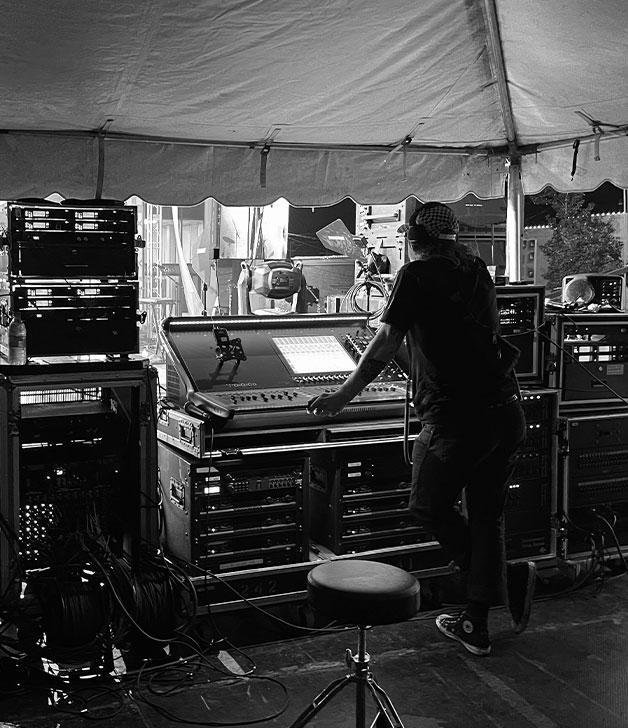
Monitor Engineering
For larger events, a dedicated monitor engineer manages the stage-side mixes — what performers hear in their wedge monitors or in-ear systems. This is a completely separate role from FOH and requires someone positioned at the side of the stage with their own console.
What to Look for in a Sound Tech
When you hire through Harmonic Production, you get engineers with real touring and live event experience — not just someone who knows how to turn a console on. Our team has worked on festival stages, broadcast productions, and arena shows. We bring that expertise to every event, large or small.
Ask for a tech who has experience with your specific venue or event type. Communication skills matter as much as technical skills — a great engineer is a collaborator, not just an operator.